

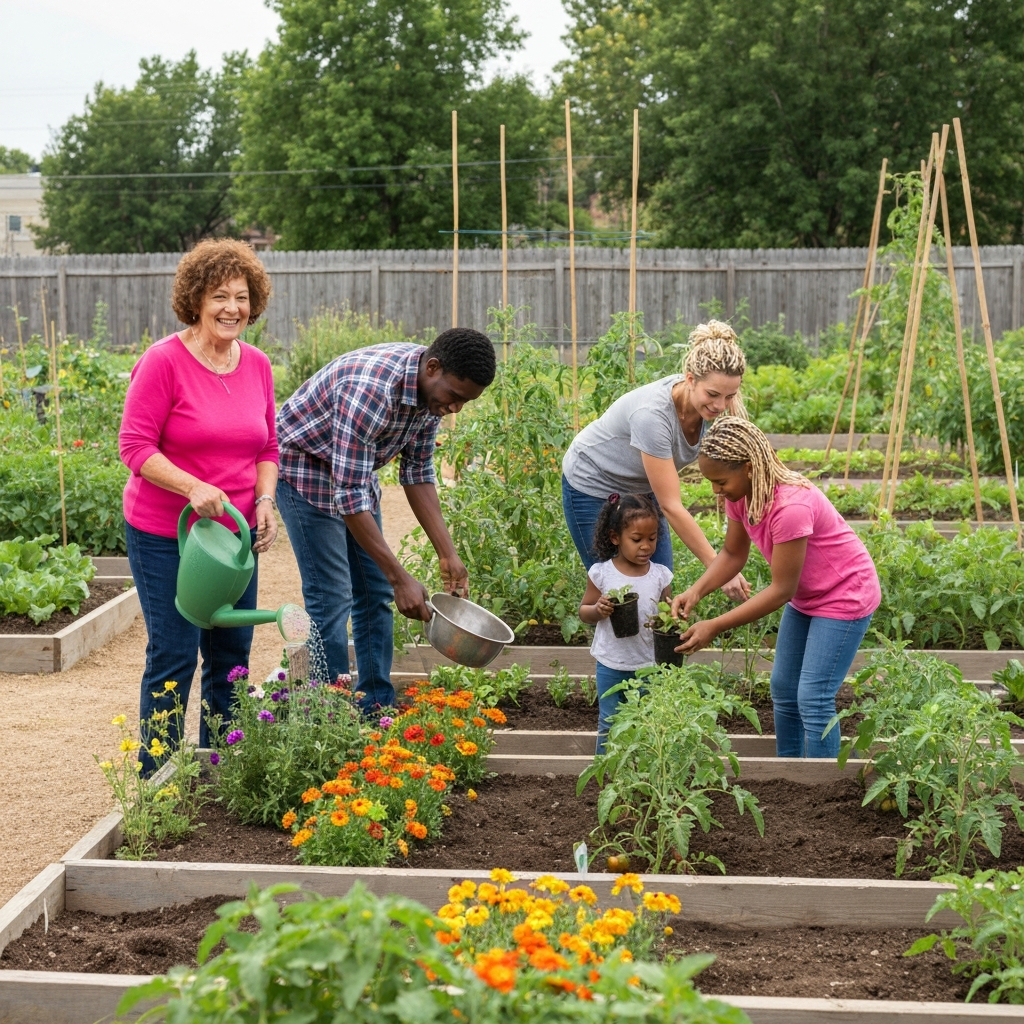
In the heart of Denver, amidst the urban landscape, community gardens have emerged as vital spaces where residents come together to cultivate not only plants but also relationships and a sense of belonging. These gardens serve as green sanctuaries, offering a respite from city life and fostering a spirit of collaboration and sustainability.
The Growth of Community Gardens in Denver
Denver Urban Gardens (DUG), established in 1985, has been at the forefront of this movement, stewarding over 200 community gardens and food forests across seven counties in the metro area. These gardens vary in size and structure but share a common goal: to provide residents with the resources and space to grow their own food, connect with neighbors, and engage in environmental stewardship. [Source]
More Than Just Gardening
Participating in a community garden offers numerous benefits beyond the harvest. Gardeners often report a deepened sense of community, improved mental health, and increased physical activity. The act of tending to a plot becomes a shared experience, bridging cultural and generational gaps. For instance, the Rosedale Community Garden, founded in 1976, has been a cornerstone for local residents, promoting organic gardening practices and community engagement. [Source]
Educational Opportunities and Food Access
Many community gardens in Denver also serve as educational hubs. The Auraria Campus Community Garden, in collaboration with DUG, offers students, faculty, and community members opportunities to learn about sustainable agriculture, composting, and the importance of pollinators. Additionally, excess produce from these gardens often supports local food banks, addressing food insecurity within the community. [Source]
Getting Involved
For those interested in joining a community garden, DUG provides a comprehensive directory and resources to get started. Whether you’re a seasoned gardener or a novice eager to learn, there’s a place for everyone. Engaging in these spaces not only yields fresh produce but also nurtures a stronger, more connected community. [Source]
In a rapidly growing city like Denver, community gardens stand as testaments to the power of collective action and the enduring human connection to the land. They remind us that even in urban settings, we can cultivate not just plants, but also relationships, resilience, and a shared sense of purpose.