

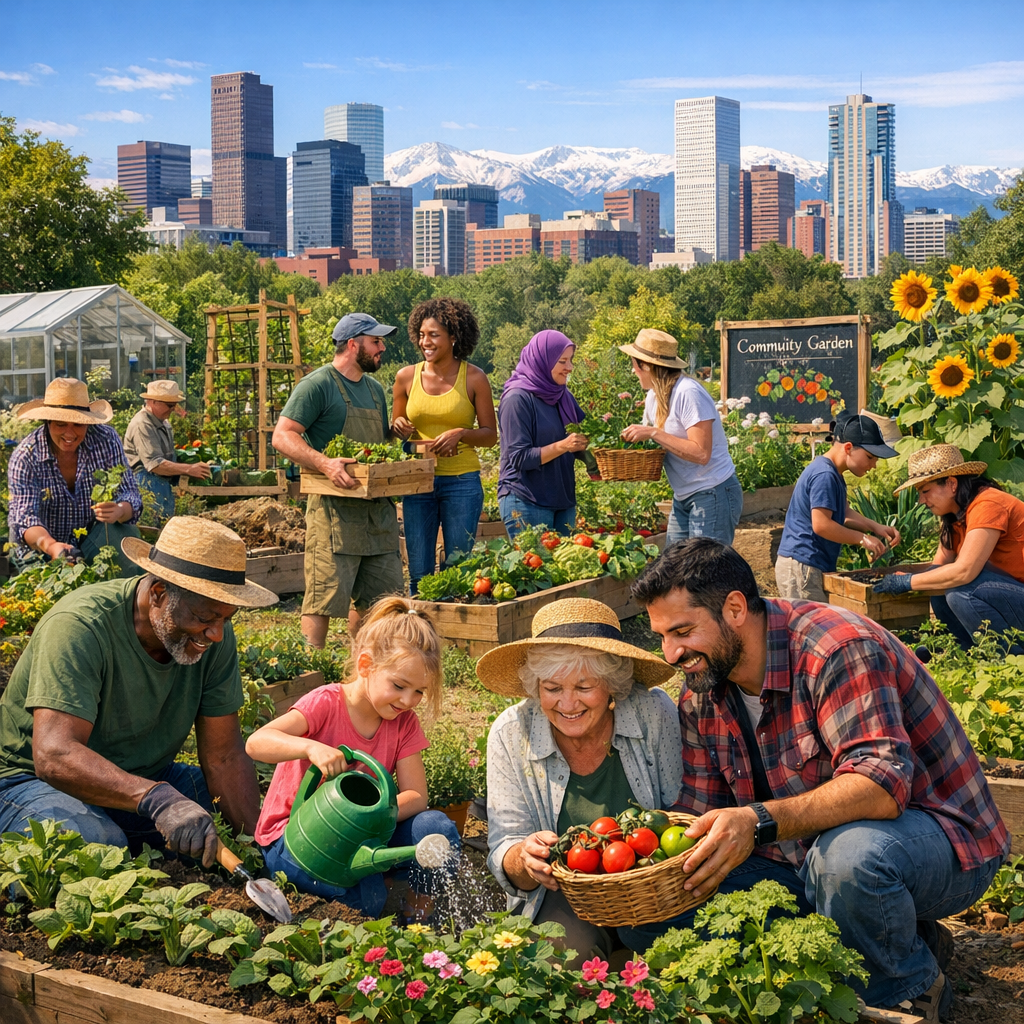
In the heart of Denver, amidst its bustling streets and urban sprawl, community gardens have emerged as vital spaces where residents come together to cultivate not just plants, but also relationships and a shared sense of purpose. These gardens serve as green sanctuaries, offering a respite from city life and fostering a spirit of collaboration among diverse groups.
The Growth of Community Gardens in Denver
Denver Urban Gardens (DUG), established in 1985, has been at the forefront of this movement. With over 200 community gardens and food forests spread across seven counties in the metro area, DUG has created a network that promotes food access, education, and environmental stewardship. These gardens are more than just plots of land; they are hubs of activity where individuals and families can grow their own food, learn about sustainable practices, and build lasting connections with neighbors. [Source]
Community Gardens as Educational Platforms
Beyond providing fresh produce, community gardens in Denver serve as educational platforms. For instance, the Auraria Campus Community Garden collaborates with Denver Urban Gardens to offer local food production, community building, and research opportunities for students, faculty, staff, and community members. This space includes an ozone garden, weather station, and is designated as a registered pollination garden, emphasizing the garden’s role in both education and environmental sustainability. [Source]
Fostering Inclusivity and Accessibility
Community gardens also play a crucial role in promoting inclusivity and accessibility. The DU Bridge Community Garden, founded in 2009 and located at 2320 S. Race Street, includes 45 raised beds, a permaculture garden, a tool shed, a greenhouse, and a community-compost system. Its mission is to promote a sense of community through the shared interest and participation in cultivating a garden, welcoming individuals from all walks of life to engage in gardening activities. [Source]
Environmental and Social Benefits
The environmental benefits of these gardens are significant. They contribute to urban green spaces, improve air quality, and support biodiversity. Socially, they provide a sense of belonging and purpose, especially in urban settings where such connections can be scarce. As one DUG gardener noted, “The other gardeners know me on a personal level and ask me questions about my life outside of the garden. I am committed to this community garden because of the friendships I have made and the impact I have had on the surrounding community from my volunteering.” [Source]
Getting Involved
For those interested in joining a community garden, DUG provides a comprehensive directory to find gardens by location. Prospective gardeners can contact garden leaders to inquire about available plots and the registration process. Most gardens operate on a first-come, first-served basis, and while there may be waiting lists, the rewards of participation are well worth the wait. [Source]
In conclusion, Denver’s community gardens are more than just spaces for growing food; they are vibrant centers of learning, connection, and environmental stewardship. They embody the city’s commitment to sustainability and community engagement, offering residents a tangible way to contribute to the well-being of their neighborhoods and the environment.