

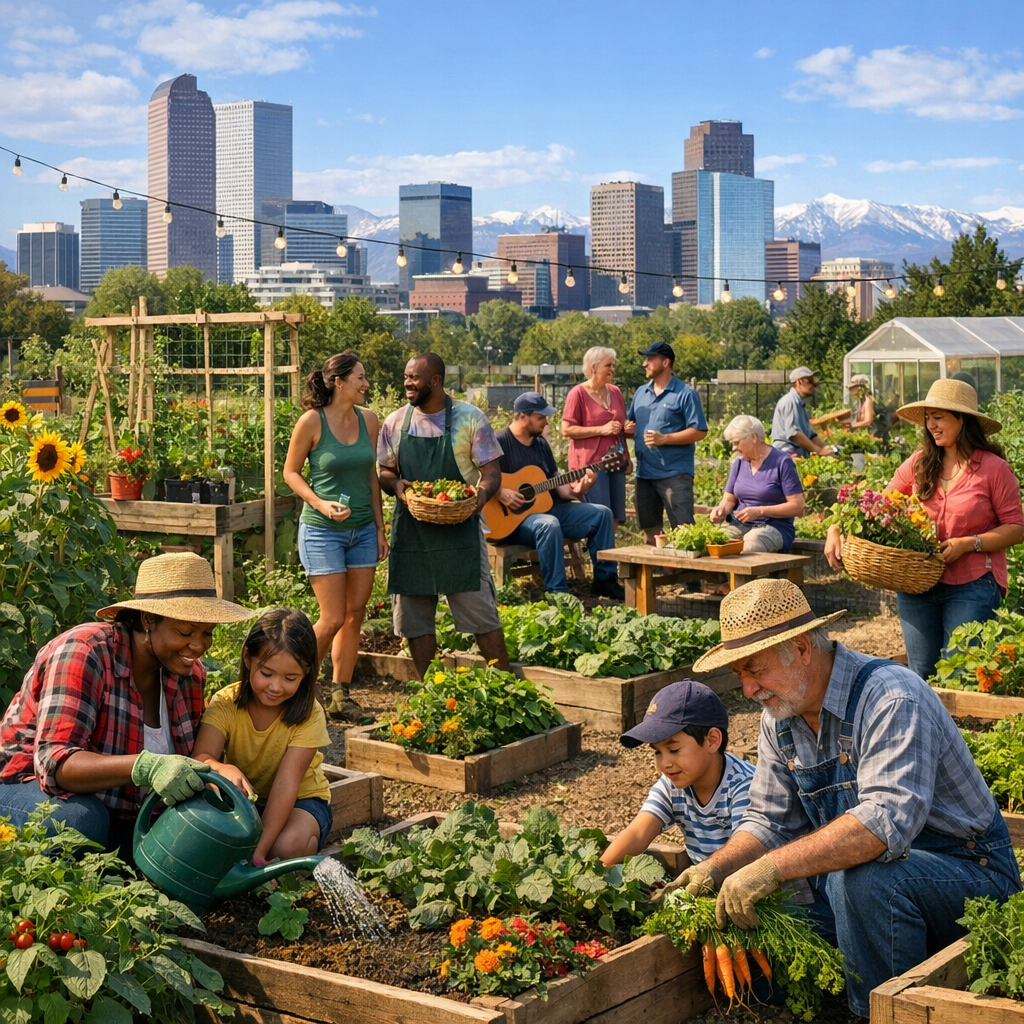
In the heart of Denver, amidst its bustling streets and towering buildings, lies a network of community gardens that serve as verdant sanctuaries for residents. These gardens are more than just plots of land; they are vibrant hubs where individuals come together to cultivate not only plants but also relationships and a sense of belonging.
The Growth of Community Gardens in Denver
Denver Urban Gardens (DUG), established in 1985, has been at the forefront of this movement. With over 200 community gardens and food forests across seven counties in the metro area, DUG has created spaces that promote food access, community building, and climate resilience. These gardens are managed by more than 300 volunteer Garden Leaders and are cultivated by thousands of community members. Each garden reflects the unique character and needs of its neighborhood, fostering a sense of ownership and pride among participants.
More Than Just Gardening
Participating in a community garden offers numerous benefits beyond the harvest. Gardeners gain access to fresh, organic produce, which can lead to improved nutrition and health. The act of gardening itself provides physical activity and mental relaxation, contributing to overall well-being. Moreover, these gardens serve as educational platforms where individuals can learn about sustainable practices, composting, and the importance of biodiversity.
For instance, the Auraria Campus Community Garden, in collaboration with DUG, offers local food production, community building, and research opportunities for students, faculty, staff, and community members. This garden includes an ozone garden, a weather station, and is designated as a registered pollination garden, highlighting its multifaceted role in education and environmental stewardship.
Building Stronger Communities
Community gardens are instrumental in strengthening neighborhood ties. They provide a common ground where people from diverse backgrounds can collaborate, share knowledge, and support one another. Events such as potlucks, seed swaps, and communal workdays foster a sense of camaraderie and collective responsibility. The Rosedale Community Garden, founded in 1976 and one of the largest DUG members, exemplifies this spirit by bringing together gardeners who share a commitment to organic practices and community engagement.
Getting Involved
For those interested in joining a community garden, DUG offers resources to find and connect with local gardens. While some gardens have waitlists due to high demand, many welcome new members and volunteers. Engaging with these gardens not only provides access to fresh produce but also an opportunity to contribute to the community and the environment.
Denver’s community gardens are more than just spaces for cultivation; they are vital components of the city’s social fabric, promoting health, education, and unity. As these gardens continue to flourish, they remind us of the power of community and the simple joy of growing together.