

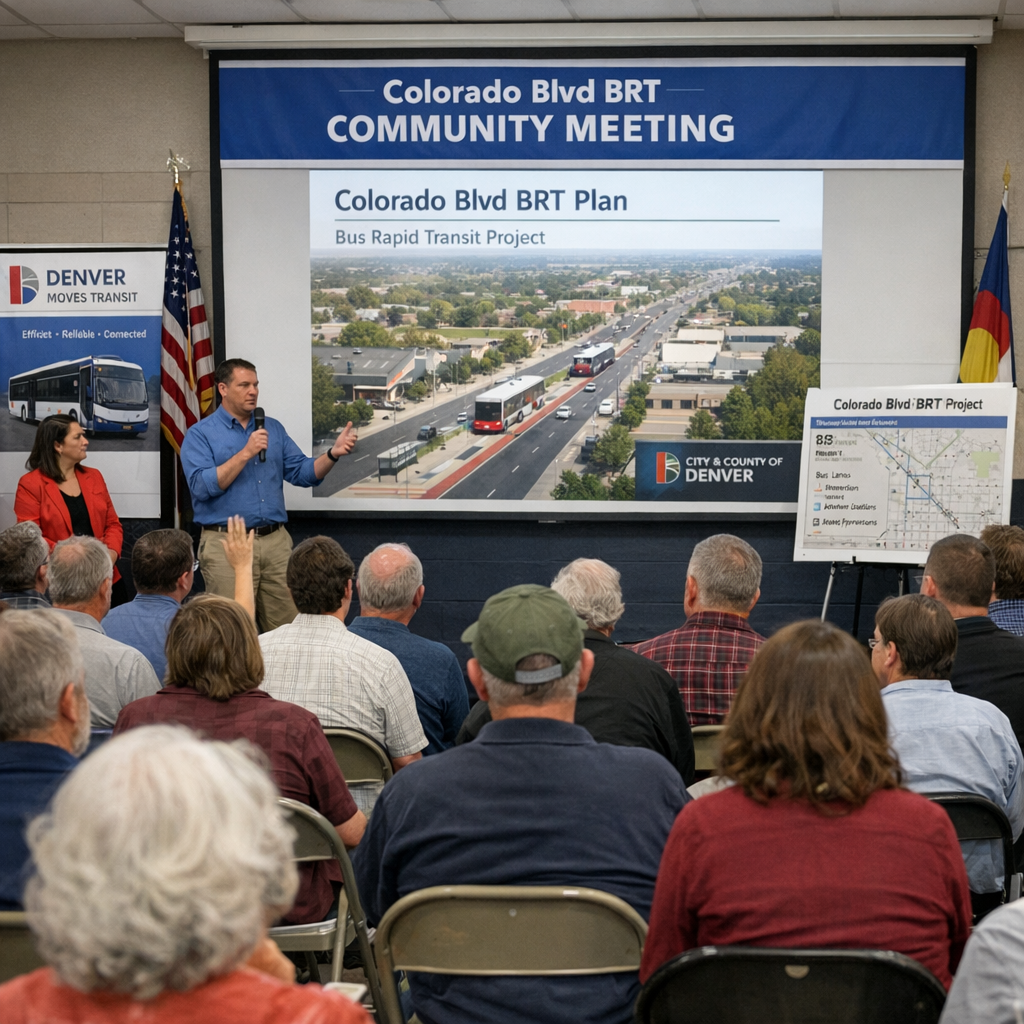
The Colorado Department of Transportation (CDOT) recently unveiled plans for a Bus Rapid Transit (BRT) system along Colorado Boulevard, spanning seven miles from 40th Avenue to Hampden Avenue. This proposal has ignited a robust discussion among Denver residents, reflecting a community deeply invested in the future of its transportation infrastructure.
Community Feedback
During a recent open house hosted by CDOT, attendees were invited to share their thoughts on the proposed BRT route. A prominent feature of the event was a large map of the corridor, which quickly became adorned with colorful sticky notes from residents. Many of these notes expressed opposition to the plan, highlighting concerns over potential lane reductions and questioning the tangible benefits of the project.
One resident, Donna Sims, voiced apprehension that the plan could lead to lane reductions without clear advantages. Conversely, supporters like Jill Locantore of the Denver Streets Partnership argue that the BRT system could enhance traffic safety by regulating speeds and providing a more efficient public transit option.
Plan Details and Options
CDOT is currently evaluating three configuration options for the BRT corridor. Notably, only two of these options include dedicated bus lanes—a point that has become a focal issue in the community discourse. The inclusion or exclusion of dedicated lanes is seen as a critical factor that could influence the effectiveness and appeal of the BRT system.
Next Steps
CDOT plans to announce its preferred BRT strategy this summer. The feedback collected from the public during the open house and other forums will play a significant role in shaping the final decision. As Denver continues to grow and evolve, the outcome of this proposal will likely have lasting impacts on the city’s transportation landscape.
Residents are encouraged to stay informed and participate in upcoming discussions to ensure that the final plan aligns with the community’s needs and expectations.