

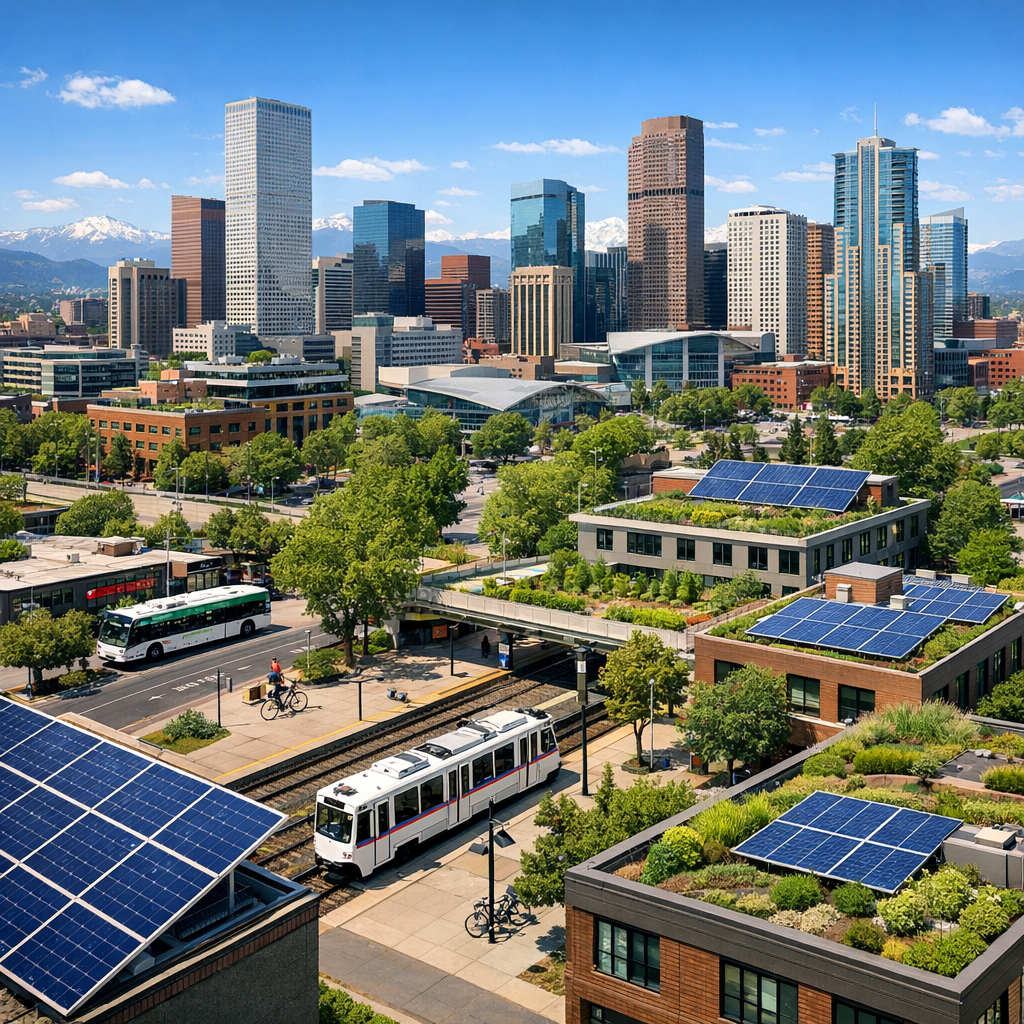
Denver has been actively pursuing various environmental initiatives to enhance sustainability and combat climate change. These efforts encompass a range of programs and policies aimed at reducing carbon emissions, promoting renewable energy, and improving urban infrastructure.
Renewable Energy and Building Efficiency
The Denver Regional Council of Governments launched Power Ahead Colorado, a program funded by a nearly $200 million federal grant from the U.S. Environmental Protection Agency. This initiative aims to reduce the environmental impact of the region’s building sector by connecting residents and businesses with energy advising, financial incentives, and verified contractors to support energy efficiency and electrification upgrades. The program also supports industry and workforce development, community innovation grants, and zero-emissions building policy implementation. Source
Water Conservation Measures
In response to severe drought conditions caused by an unusually warm and dry winter, Denver Water implemented mandatory watering restrictions for the first time in over a decade. These Stage 1 drought restrictions limit outdoor watering for single-family homes to two days per week, with a prohibition on watering between 10 a.m. and 6 p.m. The restrictions are set to remain in effect through April 30, 2027. This measure addresses record-low snowpack levels in Denver’s primary water sources, posing a significant challenge to the city’s water supply. Source
Urban Forestry and Green Spaces
Despite ongoing tree planting efforts, Denver’s tree canopy coverage has remained stagnant at 16.7% over the past five years, below the 17.9% average seen in comparable U.S. cities. Urban tree canopies offer numerous public health and environmental benefits, including cleaner air, reduced flooding, and lower temperatures. The slow growth in canopy is partly due to the time trees need to mature and the water demands in the region’s arid climate. In response, Mayor Mike Johnston aims to plant 4,500 new trees this year to support environmental goals, including reducing carbon emissions. Source
Transportation and Air Quality
The Colorado Boulevard Bus Rapid Transit (BRT) plan has sparked significant public engagement. The proposed BRT route spans 7 miles from 40th Avenue to Hampden Avenue, with three configuration options under evaluation. Only two options include dedicated bus lanes, a key point of contention among residents. Critics argue the plan would lead to lane reductions without clear benefits, while supporters contend it would enhance traffic safety through speed regulation. The Colorado Department of Transportation plans to announce its preferred BRT strategy this summer, with public opinion influencing the final decision. Source
Denver’s commitment to environmental sustainability is evident through these initiatives. However, challenges such as water scarcity, urban heat, and public consensus on infrastructure projects highlight the complexities involved in achieving these goals. Continued community engagement and adaptive strategies will be essential as Denver navigates its path toward a more sustainable future.