

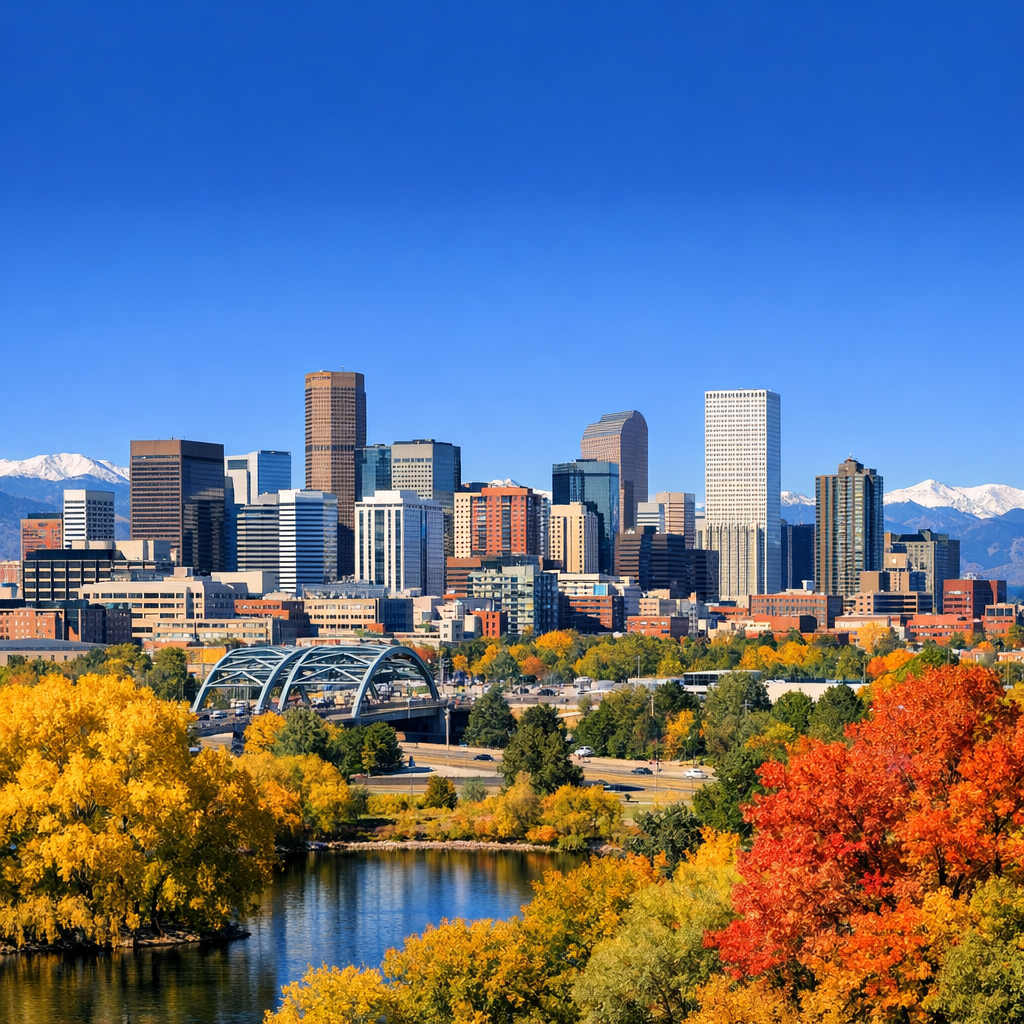
Denver’s climate offers a unique blend of characteristics that distinguish it from many other U.S. cities. Nestled at the base of the Rocky Mountains, the city experiences a semi-arid climate with over 300 days of sunshine each year, surpassing the annual hours of sun in cities like Miami and San Diego. This abundance of sunshine contributes to Denver’s appeal for both residents and visitors.
Seasonal Overview
Winter
Winters in Denver are relatively mild compared to other regions. The average daily high temperature hovers around 45°F (7°C), and it’s not uncommon for days to reach 60°F (16°C). Snowfall does occur but typically melts quickly due to the abundant sunshine, allowing outdoor activities to continue year-round.
Spring
Spring brings a mix of weather patterns, with temperatures gradually warming and landscapes blooming. However, the season can be unpredictable, with occasional snowstorms followed by rapid warming. This variability requires residents to be prepared for sudden changes.
Summer
Summers are characterized by warm days and cool evenings, with low humidity levels enhancing comfort. The average daily high in August is around 86°F (30°C). Afternoon thunderstorms are common but usually brief, providing a refreshing break from the heat.
Autumn
Autumn offers mild, sunny days with crisp evenings. The changing foliage adds to the city’s scenic beauty, making it a favorite season for many. Temperatures gradually decrease, preparing the city for the upcoming winter months.
Climate Change Considerations
Recent analyses indicate that Denver’s tree canopy coverage has remained stagnant at 16.7% over the past five years, below the average of 17.9% seen in comparable U.S. cities. Urban tree canopies provide numerous benefits, including cleaner air and reduced urban heat island effects. Efforts are underway to enhance the city’s green spaces to address these concerns.
Additionally, studies have highlighted the environmental impact of dietary choices. For instance, Denver residents’ meat consumption has been found to have a larger climate impact than the U.S. average, despite lower overall meat consumption. This underscores the importance of considering sustainable practices in daily life.
Understanding Denver’s climate and its seasonal variations is essential for residents and visitors alike. By staying informed and adopting sustainable practices, the community can continue to enjoy and preserve the unique environmental qualities that make Denver a remarkable place to live and visit.